What We Learned From Launching a State Medicaid Website + Industry News and Insights
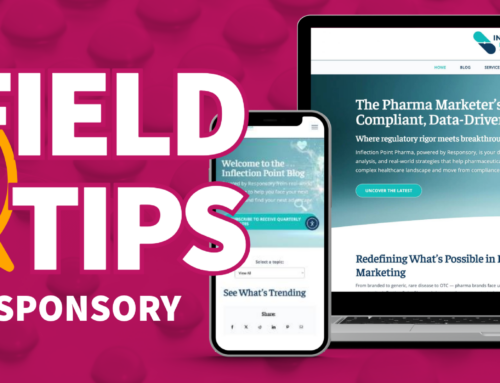
Field Tips is a biweekly email series bringing you the latest marketing trends and topics directly to your inbox. Covering everything from digital marketing and social media to content strategy and more, we curate the industry’s top stories and present them as easily digestible insights. The content contained within this post comes directly from our December 3, 2025 issue. If you’d like to receive Field Tips, subscribe to our email or on LinkedIn.
Government contractors have a compliance problem: they assume accessibility is just another checkbox on the way to launch.
But here’s the truth—it’s not a checkbox. It’s a contract requirement, a legal obligation, and increasingly, a dealbreaker.
The best government-funded websites don’t just meet WCAG standards—they navigate Section 508, ADA Title II, HIPAA, and state-level regulations without breaking a sweat. They pass third-party audits. They launch on time. And most importantly, they actually work for the people they’re meant to serve.
The problem isn’t the rules. It’s that too many teams treat accessibility as something to fix later instead of building it in from day one.
When Responsory helped Renaissance Benefits launch a website to support its Medicaid dental program for the state of Tennessee, we learned firsthand how accessibility can make or break success. In What Government Contractors Need to Know About Web Accessibility, we break down what it really takes to launch a compliant, accessible site in the public sector, including:
- Compliance framework goes way beyond WCAG—including regulations most teams miss
- Why VPATs and ACRs aren’t just paperwork—they’re proof that protects your contract
- A practical checklist for building accessibility into your process from the first wireframe
Whether you’re responding to your first government RFP or managing an existing public-sector contract, reach out and we’ll help you stop treating accessibility as a hurdle and start treating it as a competitive advantage.
Black Friday Data Shows Mixed Results
WHAT’S HAPPENING. According to data via Adobe, U.S. online spending on Black Friday 2025 hit a record $11.8 billion, up ~9.1% from 2024. However, the average selling price for goods climbed 7%, while order volumes declined 1%, suggesting consumers made fewer purchases amid ongoing inflation pressures. Meanwhile, in-store foot traffic showed mixed signals: RetailNext reported a 3.4% nationwide decline, while Pass_by showed traffic up 1.17% overall.
WHY IT MATTERS. For retailers and marketers, online shopping has cemented its position as the dominant Black Friday channel. Consumers are shopping more strategically—waiting for optimal pricing, spreading purchases across extended sale periods, and reducing impulse buying. Brands lacking robust digital experiences or competitive pricing risk losing market share as these behavioral shifts accelerate.
AI Poisoning: Black Hat SEO Is Back
WHAT’S HAPPENING. Search Engine Journal reports on new research indicating that bad actors can poison large language models (LLMs) using as few as ~250 malicious documents — a tactic dubbed “AI-poisoning.” With this, attackers can manipulate AI output (or what users see in AI-driven search) in their favor.
WHY IT MATTERS. AI platforms are now the new battleground for SEO manipulation, and the defenses aren’t built yet. Bad actors could weaponize this vulnerability to spread false information about your brand’s products, safety standards, or features, even if you’re playing by the rules. For brand and digital marketing teams, this means adding AI monitoring to your brand protection strategy and tracking sentiment shifts that could signal poisoning attempts.
Where Investors See Ecommerce Heading
WHAT’S HAPPENING. According to a recent report from PracticalEcommerce, U.S. ecommerce startup funding is projected to reach $2.73 billion in 2025, down from $28.05 billion during the pandemic-fueled peak of 2021 — a dramatic 91% decline. However, investors are concentrating capital in five specific areas: AI shopping tools, AI commerce infrastructure, rapid logistics and fulfillment, marketplaces, and live and social commerce.
WHY IT MATTERS. The path ahead for ecommerce isn’t just “more of the same.” The future favors merchants who diversify beyond their own site — leveraging marketplaces, social selling, and automation to reach customers. Brands should evaluate which platforms and tools will give them access to these emerging capabilities, and adapt by spreading presence across platforms to build agility if they want to attract investment or stay competitive.
More To Explore
The Most Visited Websites in the U.S.
New data visualized by Visual Capitalist shows the dominance of internet heavyweights: Google leads with over 16 billion monthly visits, followed by YouTube, Facebook, Amazon, and Reddit. ChatGPT enters the top 10, reflecting shifting search behavior. See the full ranking and what it means for audience reach on Social Media Today.
Google Ads Phishing Attempts Are Surging
Agencies are reporting a wave of phishing attempts targeting Google Ads manager accounts, with attackers using fake access-request emails to take over entire MCCs. Once inside, fraudsters rapidly spin up high-spend campaigns, draining budgets before teams notice. Learn how to spot and prevent these attacks on Search Engine Land.
Consumers Across All Age Groups Are Rejecting Personalized Ads
A new eMarketer analysis shows that consumers — from Gen Z to Boomers — are increasingly uncomfortable with hyper-personalized ads, even as they still value relevance. The message for marketers: personalization without transparency or permission risks pushing audiences away. Explore the data on eMarketer.
Hackers Stole Data From 200+ Companies
Google’s Threat Analysis Group revealed that a supply-chain attack tied to Gainsight exposed data from more than 200 companies, including Salesforce customers. The breach exploited trusted app integrations rather than traditional account compromises — a sign of where modern cyber risk is shifting. Get the full breakdown on TechCrunch.
Campbell’s VP Blasts Customers – Sparking Industry-Wide Backlash
A Campbell’s vice president was caught on a covert recording insulting both the company’s products and its customers, calling them “s-t for poor people” and prompting immediate public outrage and a lawsuit. The incident highlights how quickly executive misconduct can undermine brand trust — and it’s not an isolated case, as more brands face crises sparked by leadership behavior going viral. Read the full story on Adweek.

About the Author
A prominent marketing strategist and nationally recognized thought leader, Grant A. Johnson is president and CEO of Responsory. He is a sought-after public speaker, direct marketing trainer, copywriter, award-winning author and the creator of Direct Branding℠, Responsory’s method for producing sure-fire measurable results.