Multichannel or Omnichannel: Are Your Marketing Channels Truly Connected?
Today’s consumers fluidly switch between social media, websites, and physical stores, expecting a unified brand experience rather than disconnected interactions. Yet while 88% say customer experience is as crucial as product quality, less than half feel brands deliver connected journeys effectively. Read our full guide on multichannel vs omnichannel marketing to explore key differences, take a quick 5-question maturity assessment and learn how to transform isolated channels into a seamless customer experience.
Today’s customer journeys rarely happen in one place. A customer might discover a brand through social media, research products or services on its website, visit a physical location, engage with an email and ultimately make a purchase through an app. To the customer, these aren’t separate experiences; they’re all interactions with the same brand.
That makes the connections between channels increasingly important. In fact, 88% of customers say the experience a company provides is just as important as its products or services.
For marketers, simply being present across multiple channels is only part of the strategy. The real opportunity lies in how well those channels work together to create a cohesive customer experience.
This distinction is at the heart of the multichannel versus omnichannel marketing debate. And while the terms are sometimes used interchangeably, they represent different approaches to channel strategy and the overall customer journey. Understanding where your organization falls (and where greater integration could create value) can help you make smarter decisions about your marketing approach, technology and resources.
Let’s take a closer look at the key differences between omnichannel and multichannel marketing, what each approach looks like in practice and explore how organizations can progress toward a more connected customer experience.
What is Multichannel Marketing?
Multichannel marketing is the practice of using multiple channels to reach and engage customers, with each channel often having its own strategy, data, goals and measurement.
For example, an organization might market through a mix of email, paid search, social media, its website and retail locations. Each channel may perform well and drive results, but customer context doesn’t necessarily flow between them.
A customer who browses a product on the website, for example, might later receive an email that doesn’t necessarily reflect that activity. Or someone who purchases in a store might continue to see digital ads for the same product. The individual channels are working, but they don’t always have enough shared context to respond to customer actions.
This doesn’t mean that multichannel isn’t effective. For many organizations, it can be a practical and valuable strategy, especially when individual channels serve distinct purposes or when deeper integration wouldn’t justify the investment. The defining characteristic is simply that the strategy tends to be organized around individual channels rather than one connected, cross-channel customer journey.
What is Omnichannel Marketing?
Rather than treating each touchpoint as an isolated interaction, an omnichannel approach uses context from across the journey to inform what happens next. Where multichannel marketing asks, which channels should we use?, omnichannel marketing adds another question: how should those channels work together?
Omnichannel marketing goes beyond simply adding more channels, and instead focuses on connecting them around the customer journey. Customer data, interactions and messaging are carried across relevant touchpoints to shape a customer’s complete and highly personalized experience with a brand.
The simplest distinction: Multichannel marketing gives customers multiple ways to interact with a brand. Omnichannel, on the other hand, helps those interactions work together.
What’s the Difference Between Omnichannel Marketing and Multichannel Marketing?
Now let’s take this a step further and compare omnichannel vs. multichannel marketing side-by-side.
| Multichannel | vs | Omnichannel |
|---|---|---|
| Reaching and engaging customers through multiple channels. | Focus | The customer experience across connected touchpoints. |
| Uses multiple channels that typically operate independently. | Integration | Integrates channels, data and interactions to create a connected experience. |
| Tailors experience within individual channels, with less coordination across channels. | Adaptability | Personalizes channel experiences based on preferences, behavior, context and history. |
| Selects channel mix based on audience, objectives and channel performance. | Strategy | Connects relevant channels to support a continuous customer journey. |
| Optimized for each individual channel. | Experience | Cohesive and personalized as customers move between channels. |
| Tailored to each channel and its audience. | Messaging | Informed by insights and history across channels and touchpoints throughout the journey. |
Key Takeaways
These distinctions may seem subtle, but become much clearer when you follow a customer through an actual journey.
What Do Omnichannel and Multichannel Look Like in Practice?
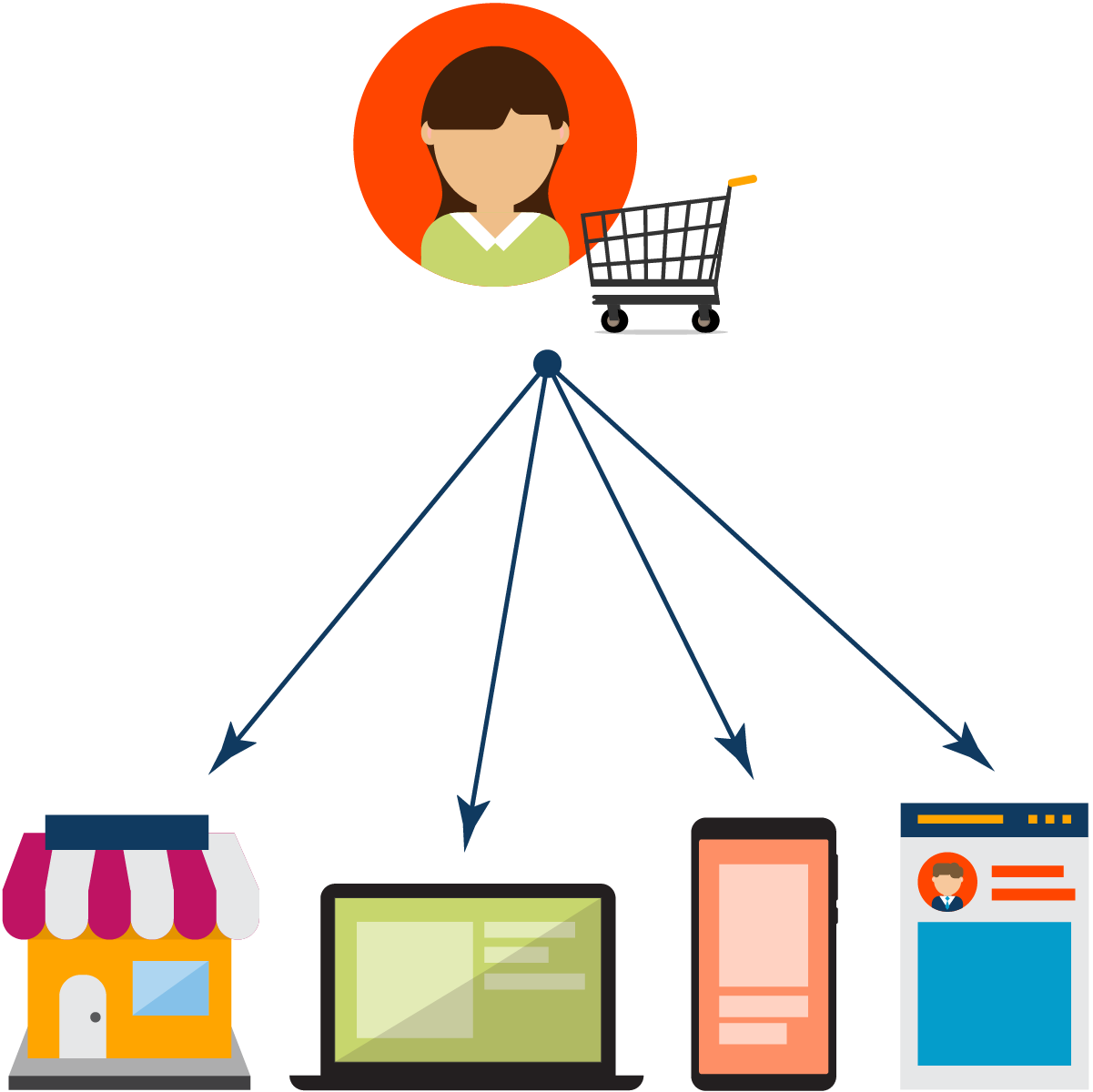
Multichannel
Social ad + website visit + generic email + store visit + purchase
Each touchpoint works, but little context moves between them.
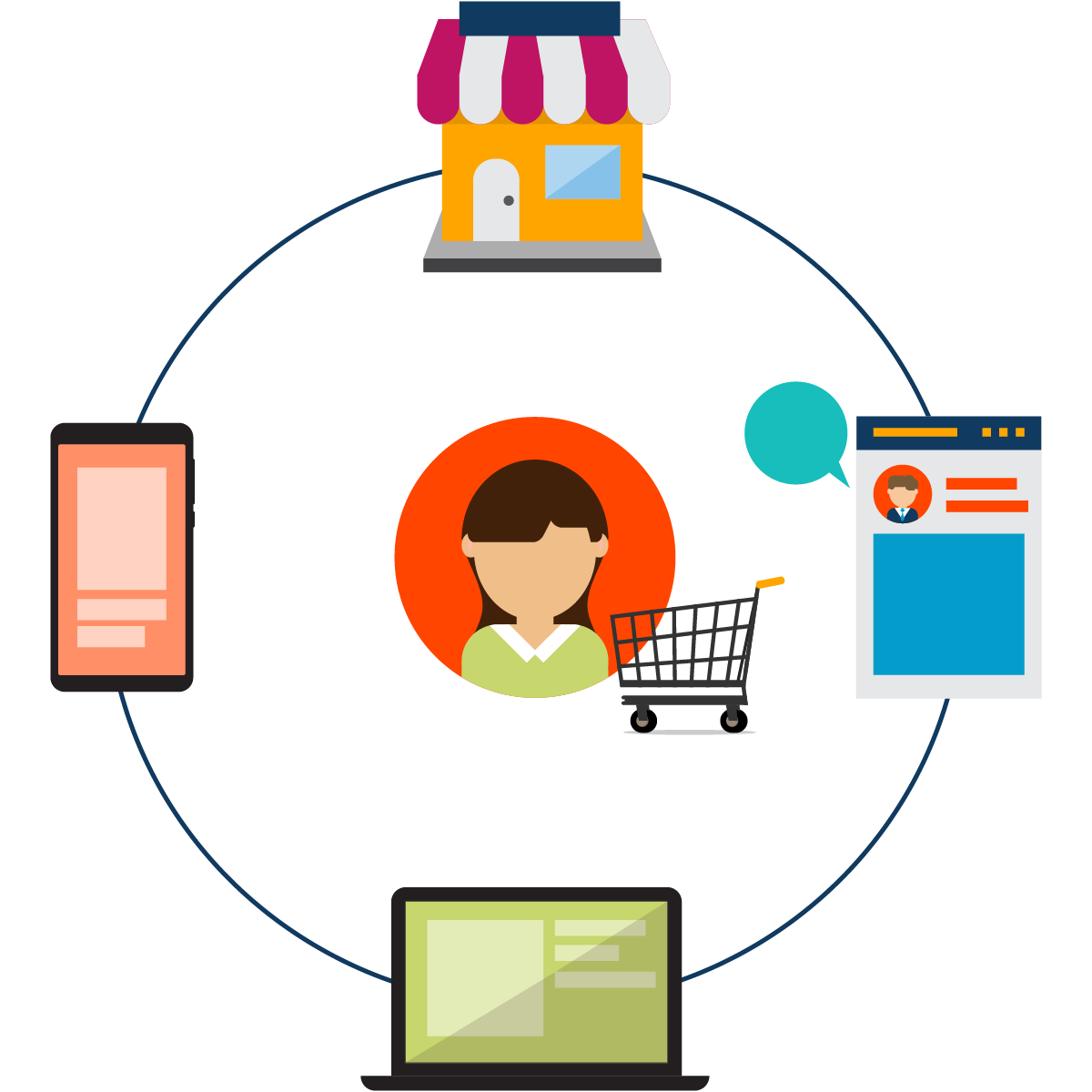
Omnichannel
Social ad → website visit → personalized email follow-up → local inventory check → store visit → purchase recognized across channels
The channels respond to what happened previously.
As you can see from this hypothetical example, the difference isn’t the number of touchpoints. It’s whether each touchpoint understands enough about what came before to move the customer journey forward and shape an integrated experience.
Why Connected Experiences Matter
Customers increasingly expect brands to provide relevance and continuity as they move between channels. Yet many organizations lack the data, technology and strategy required to deliver it.
According to Adobe research, 78% of consumers say it’s important for brands to provide a cohesive experience across digital and physical channels, but only 45% say brands deliver that experience effectively. Even fewer (34%) successfully deliver timely and relevant offers or communications.
This gap highlights one of the central challenges of omnichannel marketing: adding channels is relatively easy, but connecting them is much harder.
So how does an organization evolve from multichannel to omnichannel? In many cases, it develops gradually as channels become more connected, customer data becomes more accessible and teams gain the technology and processes needed to optimize the customer journey.
The Progression From Multichannel to Omnichannel
A simple way to think about this evolution is through five stages:
The Leap From Multiple Channels to Connected Experiences
The most profound shift in omnichannel maturity begins when an organization moves from simply managing multiple channels to connecting them.
Moving from single channel to multichannel is mostly about expansion — adding email, paid search, social or other ways for audiences to interact with your brand. Moving toward omnichannel, however, requires integration. Instead of adding another channel, you’re now connecting customer identities, data, technology, measurement and experiences so that each interaction can build on the ones that came before it.
And as the chart above illustrates, there isn’t a finish line. Even organizations with sophisticated omnichannel capabilities must continually test and adapt as customer behavior, technology and business objectives evolve. That’s exactly what Stage 5 represents; not a final destination, but an ongoing cycle of optimization.
So where does your organization fall on this channel marketing continuum?
Are You Really Omnichannel? A 5-Question Check
Many brands market across multiple channels. But simply having a website, email program, social presence, mobile app and physical locations doesn’t necessarily make the experience omnichannel.
This quick assessment will help you determine how connected your marketing experience really is. Answer each question with a ‘yes’ or ‘no’ based on your organization’s current abilities. We’ll also show you what a ‘yes’ looks like in practice and why it matters.
How to Evolve from Multichannel to Omnichannel Marketing
If you think your organization could benefit from a more integrated, omnichannel approach, start with the customer journeys and business outcomes that matter most (rather than trying to connect everything at once). Then, build the capabilities needed to support them.
1. Map the customer journey before adding more channels.
Understand how your customers move from awareness to consideration, conversion, retention and advocacy. Identify key touchpoints, handoffs and friction points to identify where customer context may get lost. This is where greater integration could create the most value.
2. Pay extra attention to the handoffs.
Organizations naturally spend a lot of time optimizing experiences within channels. But some of the most critical experiences happen between them.
Where do customers receive repeat information? Where does an interaction unexpectedly end? What information would make the next interaction more relevant or seamless?
3. Connect the data that matters.
You don’t have to integrate every available customer data point. Focus on the data necessary to make priority journeys more continuous. For example, purchase history might need to inform email and paid media so customers aren’t repeatedly targeted for products they already own.
4. Integrate technology around specific use cases.
It’s easy for omnichannel initiatives to become technology-first projects. But before you start planning for a new CRM or omnichannel tech stack, focus on the experience you want to enable.
What should happen when a customer browses a product but doesn’t purchase? What information should be available when someone moves from a digital interaction to a conversation with sales?
5. Align teams and measurement.
Channel silos aren’t only a technology problem. If teams have separate goals, budgets, KPIs and incentives, technology alone won’t create an omnichannel experience. Establish shared objectives around the customer journey and think beyond basic channel-level metrics. Consider outcomes such as retention, repeat purchases, customer lifetime value and cross-channel behavior.
Multichannel Can Still Be Effective
Omnichannel isn’t automatically the right approach for every organization. A well-executed multichannel strategy may make more sense when:
- Customer journeys are relatively simple.
- Resources or technology are limited.
- Customers have relatively few meaningful cross-channel interactions.
- Different channels serve distinct audiences or purposes.
- Higher-priority marketing capabilities need to be addressed first.
Remember, the goal isn’t to adopt an omnichannel approach for its own sake. The level of integration should reflect the needs of your customers and the value it can create for your business.
Build a More Connected Customer Experience
Customers don’t care how your marketing organization is structured. They don’t care that email lives in one platform, customer service in another or that paid media belongs to a different team.
They experience one brand.
That’s ultimately what an omnichannel strategy should be designed around — so that every piece of your customers’ overall experience feels as seamless and relevant as possible.
And the work is never truly finished. Customer behaviors change. New touchpoints emerge. Technology evolves. A successful omnichannel strategy will evolve with them, continually identifying opportunities to create better connections and drive more value.
Let’s Connect
Not sure whether your organization needs a multichannel or an omnichannel approach, or what it will take to get to the next stage?
Our team can help you identify the right opportunities, connect your marketing efforts and build a marketing strategy around your unique business goals. Get in touch with us today.

About the Author
With more than 16 years of experience across corporate and agency marketing environments, Ana Cook has built her career around creating content that connects with audiences and inspires action. As Senior Content Strategist at Responsory, she combines sharp editing skills and attention to detail with a strategic mindset, crafting content that resonates, supports business goals and delivers measurable results.
Outside of work, Ana is often planning her next adventure. A lifelong traveler with a constant case of wanderlust, she loves exploring new places with her husband and two children. When she’s not mapping out the family’s next trip, you’ll likely find her visiting an art museum, enjoying live music, trying a new recipe, or spending quality time with her family.