5 Pharma Marketing Principles That Actually Work (And the Campaigns to Prove It)
What separates successful pharmaceutical marketing from campaigns that simply check the boxes? It isn’t bigger budgets or the latest tactics — it’s proven principles backed by measurable results. Explore five real-world strategies that have helped brands accelerate launches, engage healthcare professionals and patients and deliver lasting business impact.
Pharmaceutical marketing advice is everywhere. From frameworks and best practices to conference panels and trend reports, the industry isn’t short on opinions about what great marketing should look like.
What it is short on is proof.
At Responsory, measuring results isn’t an afterthought, It’s built into the strategy from the start. The strongest campaigns don’t just look polished or launch on time. They drive outcomes that matter: patient acquisition, HCP engagement, search visibility, compliance efficiency and long-term brand growth.
Here are five principles we live by, drawn from our Tiny Book of Big Results: Pharmaceutical Marketing Edition and backed by the real-world results that shaped them.

1. Map Every Stakeholder Before You Build Anything
In pharmaceutical marketing, the question isn’t just “Who’s the audience?” It’s “How many audiences do we actually have and what does each one need in order to act?”
Patients, caregivers, prescribers, pharmacists, payers and advocacy groups all influence decisions in different ways, often at different points in the journey. Each arrives with completely different questions, concerns and decision criteria.
Brands that treat these audiences as one group often create experiences that serve none of them particularly well. Brands that invest the time upfront to understand every stakeholder can create experiences that work for everyone from the very first interaction.
Our Approach
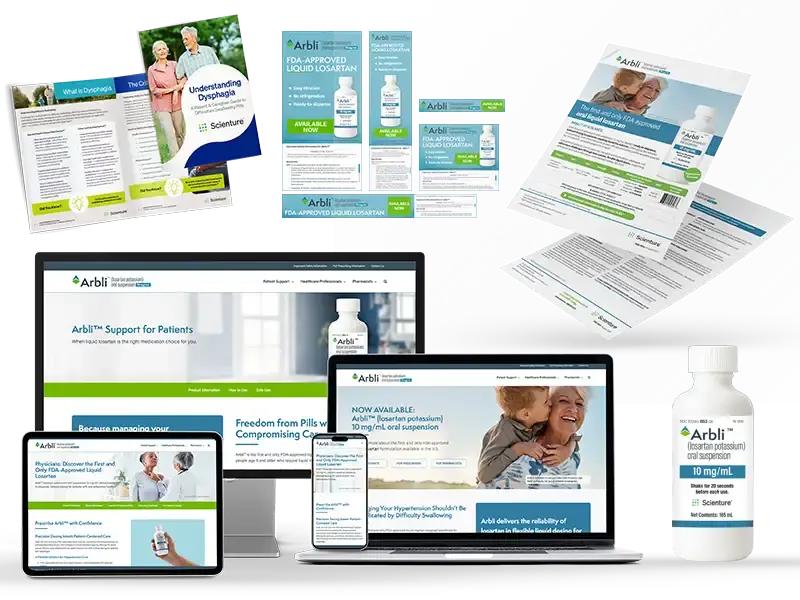
When Scienture needed to launch Arbli™, the first FDA-approved liquid losartan, the stakeholder challenge was unusually complex. The brand needed to educate multiple audiences simultaneously: patients managing hypertension, caregivers helping loved ones with swallowing difficulties, prescribers weighing clinical relevance and pharmacists needing dispensing guidelines. We built a compliant digital ecosystem that gave each group a clear content path while keeping the overall brand experience consistent.
We started by mapping the needs, questions and decision-making roles of each audience. That insight helped shape content paths for every stakeholder while maintaining a consistent brand experience. The result was a centralized hub designed to support launch readiness, audience education and sales enablement. The site served as the hub for commercial launch readiness, audience education and sales enablement.
The Proof
Arbli™ launched on schedule with a fully compliant digital foundation built to support commercial sales from day one. The ecosystem included audience-specific resources for prescribers, pharmacists, patients and caregivers, along with campaign-ready assets designed to drive awareness, engagement and adoption across all channels.

2. Target with Precision, Not Volume
In pharmaceutical marketing, broad reach is often wasted reach. Prescribing patterns, patient populations, formulary access and treatment philosophy vary significantly even among physicians in the same specialty.
The most effective campaigns go beyond specialty lists and audience segments. They account for clinical context, prescribing behavior, treatment philosophy and the real-world factors that influence decision-making. When messaging aligns with a clinician’s specific needs and practice realities, engagement becomes more relevant and more likely to drive action.
Our Approach
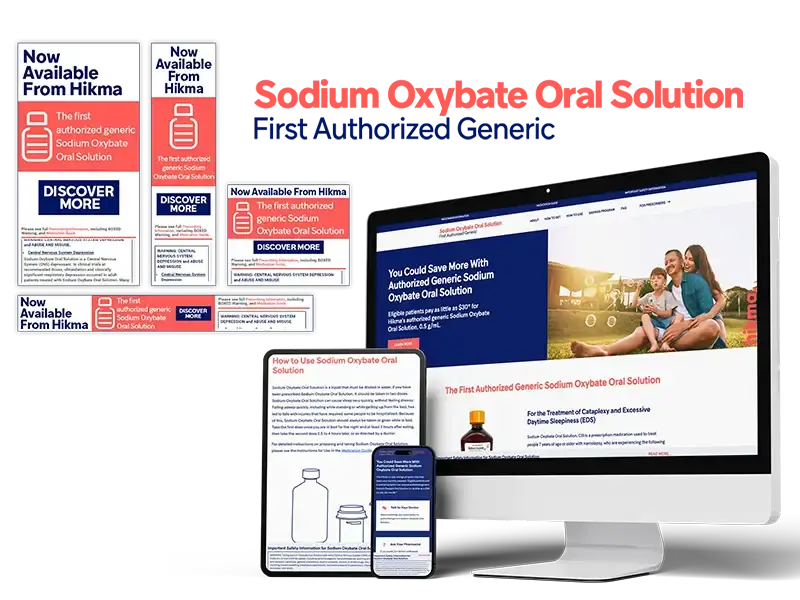
When Hikma Pharmaceuticals launched its authorized generic sodium oxybate oral solution — the first authorized generic of the narcolepsy treatment Xyrem® — the window of opportunity was narrow. They had approximately six months before additional competitors could enter the market. Broad awareness wasn’t the goal. Reaching the right sleep medicine physicians, fast, was.
Rather than casting a wide net, we built a targeted multichannel campaign, including digital display, PPC and email, designed specifically around the prescribing behavior and decision-making context of sleep specialists. The website served both physicians without diluting either message giving HCPs efficacy affordability and REMS information while giving patients access to savings, dosing and safety resources.
The Proof
Within 16 months of launch, the campaign drove more than 4,600 new patients. Even after new competitors entered the market, the campaign continued to perform. Hikma’s executive chairman cited the product directly as a primary driver of strong financial performance that year, demonstrating the impact of reaching the right audience with the right strategy.

3. Give People a Reason to Come Back
Healthcare professionals and patients are not looking for more brand noise. They are looking for reliable information, practical guidance and confidence that they are making informed decisions. Pharma brands that only show up when they have something to sell are easy to ignore. Brands that become a resource give audiences a reason to return.
Our Approach
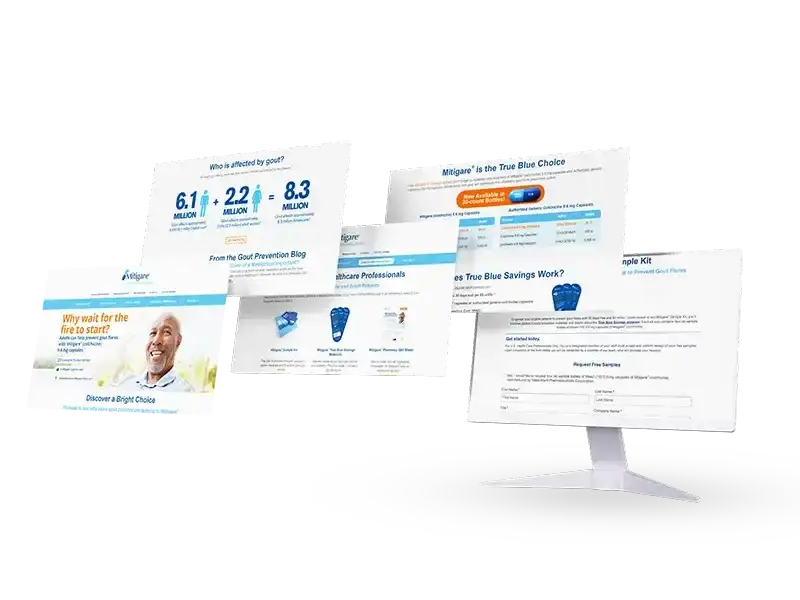
Hikma’s Mitigare® brand had strong product potential, but its digital presence wasn’t generating the level of engagement needed to support growth. The website wasn’t driving enough HCP sample kit requests or co-pay savings card downloads, and paid traffic wasn’t converting as effectively as it could.
Our audit revealed the root issue: the site lacked the educational depth needed to support ongoing engagement. Rather than simply increasing media spend, we focused on creating a more valuable experience. We developed targeted content libraries for both patients and healthcare professionals, launched a new SEO-optimized gout flare prevention blog and redesigned the site around high-value actions rather than general brand awareness.
The Proof
Within 12 months, paid search traffic surged over 1,000%, HCP engagement climbed dramatically and the brand achieved stronger results while spending substantially less than the previous year’s budget. By giving audiences meaningful reasons to return, Mitigare® transformed its digital presence from a one-time destination to an ongoing resource.

4. Build Compliance Into the Process
The most expensive mistake in pharmaceutical marketing is treating compliance as the final step. But when Medical, Legal, and Regulatory (MLR) teams are brought in only after concepts are developed, the result is often costly revisions, delayed launches and diluted ideas.
The most successful brands take a different approach. They account for regulatory requirements from the beginning, incorporating compliance considerations into strategy, messaging and creative development. When compliance is built into the process rather than layered on as an afterthought, teams can move faster, collaborate more effectively and bring stronger ideas to market with greater confidence.
In this context, compliance is not a barrier to creativity; it’s a framework that helps sharpen strategy.
Our Approach
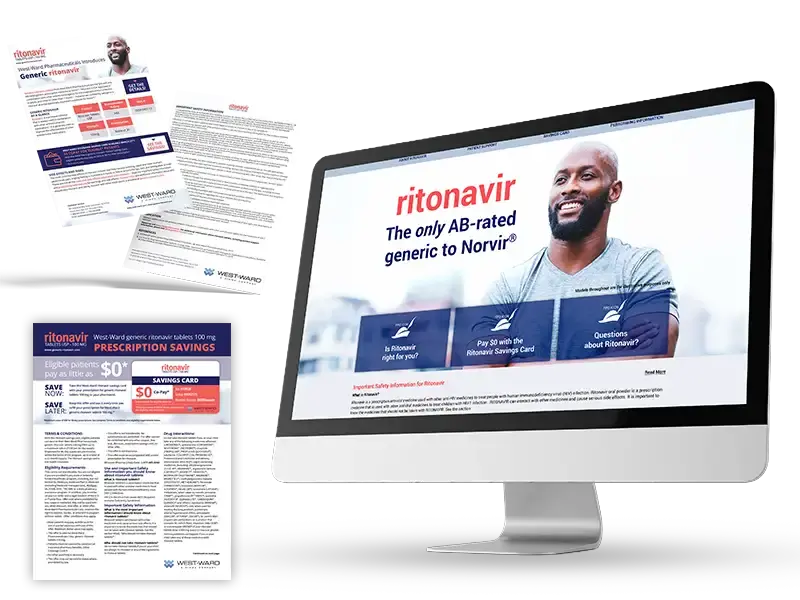
When Hikma needed to launch its generic ritonavir brand in time for a hard annual meeting deadline, there was no room for late-stage surprises. The brand needed a complete identity, website, email campaign and physical collateral in a matter of weeks.
By applying our Direct Branding℠ methodology, we integrated regulatory considerations into the process from the outset. By aligning strategy, messaging and creative development with compliance requirements early, we were able to move quickly without sacrificing quality or introducing unnecessary risk.
The Proof
Every component of the ritonavir launch was delivered on time and on budget. Hikma arrived at its annual meeting with a complete, market-ready brand identity, digital presence and launch collateral – all developed to meet quality and compliance standards while supporting a successful product introduction

5. Make Every Channel Work Together
The patient and HCP journey is never a straight line. Someone might discover your brand through a display ad, visit your website from a search result, engage with an email campaign and see your message reinforced on social media. Each interaction shapes their perception of the brand and influences what they do next.
If those touchpoints don’t speak the same language, audiences are forced to connect the dots themselves. Messaging becomes fragmented, experiences feel inconsistent and opportunities for engagement are lost; the cumulative effect is friction instead of momentum.
Our Approach
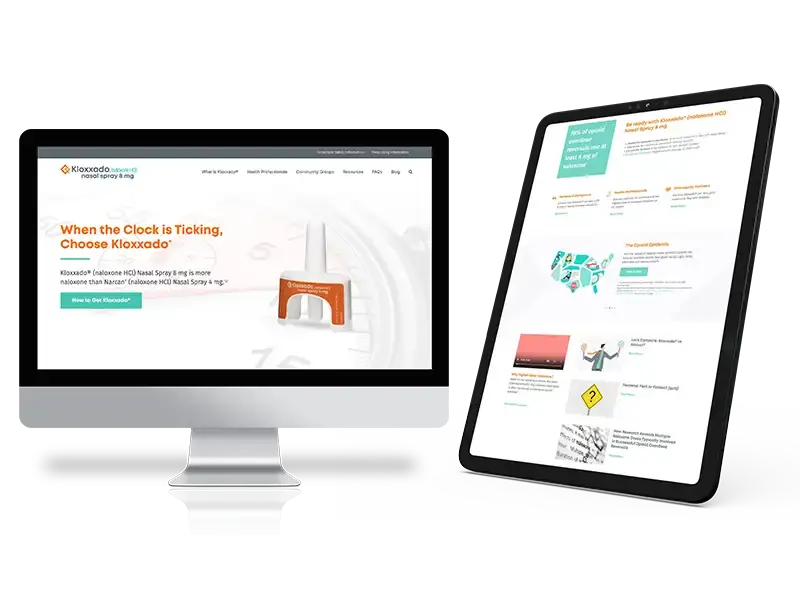
When Kloxxado®, Hikma’s higher-dose naloxone nasal spray, faced an increasingly competitive and rapidly evolving market, its digital strategy needed to do more than just generate traffic. It’s primary competitor had moved over the counter, new entrants were arriving and public education around overdose prevention was becoming increasingly urgent.
We began by shoring up the brand’s foundation. The Kloxxado website was rebuilt with new audience-specific sections and SEO-rich educational content for healthcare professionals, pharmacists, community organizations and law enforcement. To extend that strategy beyond the site, we introduced a targeted Reddit campaign focused on harm reduction communities, public health advocates and healthcare workers.
The Proof
After one month, the Reddit campaign had generated more than 500,000 impressions, expanding awareness of overdose prevention among key audiences. The educational initiative was impactful enough to be shared with the White House as evidence of the manufacturer’s commitment to public health education. At the same time, the site itself continued to gain momentum, averaging 25% month-over-month user growth as paid, organic and social channels worked together to drive engagement.
The Common Thread
Look across all five of these principles and a pattern emerges. Successful pharma marketing isn’t driven by a single channel or campaign. It’s built on a deep understanding of the audiences you serve, a disciplined approach to execution, and a commitment to measuring what matters. The brands that consistently outperform their competitors take time to understand every stakeholder, target with precision, create meaningful experiences, build compliance into the process and connect every channel into a cohesive strategy.
These principles are drawn from our Tiny Book of Big Results: Pharmaceutical Marketing Edition — a collection of lessons learned from more than two decades of product launches, brand transformations and growth initiatives across the pharmaceutical industry. While the tactics may change, the principles behind successful outcomes don’t.
If you’d like to explore these ideas in more depth, download the Tiny Book of Big Results. Or if you’re looking for a partner to help solve your next marketing challenge, connect with our team to start the conversation.

About the Author
With over 25 years of multi-channel experience, Jill Zacher combines meticulous attention to detail with creativity and clarity in everything she works on. She has deep pharmaceutical marketing expertise in engaging health care providers and patients and understands how to navigate the complex, regulated path from approval to launch. She’s also skilled at coordinating complex campaigns, keeping projects organized, compliant and impactful.