The Engagement Rx: Diagnosing the Leaky Bucket in Your Brand’s Digital Strategy
Are you pouring a premium ad budget into a leaky bucket? Driving traffic to your pharma site is only half the battle; the real victory lies in the last mile of engagement. Updated for today’s high-intent HCP and patient audiences, this guide reveals why you should stop buying more traffic and start fixing your destination.
In the pharmaceutical world, driving users to your website is often the cornerstone of the marketing budget. We spend millions on programmatic ads, targeted social campaigns, and HCP portals to ensure our brand is seen. But for many product launches, there is a costly disconnect: we are pouring premium traffic into a leaky bucket.
When a site gets traffic but fails to engage, the problem is rarely the audience. The issue is usually a destination that prioritizes clinical data over user momentum. In a high-stakes, regulated environment, engagement isn’t a vanity metric — it’s the only way to bridge the gap between a click and a conversion. Whether that conversion is a sample request from a time-pressed physician or a savings card download for a patient, every friction point on your site is a hole where your ROI is draining away.
To win this last mile of the digital journey, pharma marketers must shift their focus from simply buying more traffic to fixing the destination. By identifying and plugging the leaks in our digital strategy, we can turn a static clinical brochure into a high-performance engine that respects the user’s time and the brand’s bottom line.
Finding Holes in Your Pharma Website Performance
To effectively plug the leaks in a pharma marketing funnel, we must first identify where the friction occurs. In a highly regulated space, these holes are often the result of prioritizing legal box-checking or broad-reach metrics over the actual needs of the person behind the screen.
Here are the four most common friction points we uncover during a digital audit:

The Invisible Response Mechanism
A website’s primary job is to facilitate the next step in the treatment journey. However, in an effort to present extensive clinical data, many brands inadvertently bury their most critical conversion tools—such as sample request forms or patient savings cards—three or four clicks deep.
For a time-pressed Healthcare Professional (HCP) or a patient seeking immediate financial relief, if a resource isn’t visible within seconds, it effectively doesn’t exist. High-performing sites treat these response mechanisms as north star elements, ensuring they are persistent and accessible regardless of which page a user lands on.

The Educational Dead-End
Pharma websites are excellent at providing information, but they often fail at providing momentum. We frequently see robust clinical sections or patient blogs that educate the user but offer no clear path forward once the reading is done.
If a patient finishes an article on managing gout flare-ups but isn’t immediately presented with a way to lower their out-of-pocket costs, the moment of highest intent is wasted. Strategic engagement requires mapping every piece of content to a specific action, turning a passive reader into an active participant.

Misaligned Traffic Sources
A leaky bucket isn’t always caused by a hole in the site; sometimes, it’s caused by the quality of the water being poured into it. Many brands focus on vanity metrics like total sessions, using broad keywords that attract general curiosity seekers rather than the specific patient populations or specialists the drug is intended for.
When your traffic doesn’t match your conversion goals, your engagement metrics will naturally plummet. Plugging this leak requires a disciplined alignment between your search strategy and your site’s internal response mechanisms to ensure you are attracting visitors who actually have a reason to stay.

The Compliance-Clunky User Experience
The necessity of Important Safety Information (ISI) and regulatory fair balance is often blamed for poor website performance. While these elements are non-negotiable, they shouldn’t be an excuse for a jarring user experience.
Common leaks occur when over-engineered ISI overlays or intrusive legal pop-ups break a user’s flow, leading to high bounce rates. The goal is to design a compliant-first architecture where safety information is accessible and clear, but integrated in a way that doesn’t obstruct the user’s ability to find dosing guides or efficacy data.
MITIGARE SUCCESS STORY
From Leaky Bucket to ROI Engine
The leaky bucket isn’t just a metaphor — it’s a growth killer. Mitigare, a leading colchicine brand for gout, was pouring media spend into a digital presence that couldn’t hold water. Despite steady traffic, conversions were stagnant and ROI was drying up.
Our Cure: Building a High-Conversion Hub
We didn’t just patch the holes; we rebuilt the bucket. We transformed Mitigare’s site into a mission-critical engine focused on three high-impact goals:
- Capture Intent: Launched a Gout Prevention Blog and Resource Library to dominate organic search.
- Simplify Savings: Reimagined True Blue Savings pages for frictionless patient access.
- Fuel Growth: Streamlined the physician portal to make sample kit requests effortless.
The Results: Efficiency That Scales
By removing friction and prioritizing response mechanisms, we didn’t just increase traffic—we maximized it. Every dollar now works harder.
- 10%+ increase in total users.
- 21%+ increase in pageviews, with a 690% surge in new blog pageviews.
- 45% of all traffic was successfully funneled to True Blue Savings pages.
- 17% higher dollars in True Blue Savings claims.
- 77% more physician sample kit requests.
For more about this project, check out the full Mitigare case study.
3 Steps to Audit Your Own Leaky Bucket
Before you commit more budget to top-of-funnel awareness, it is critical to ensure your site is prepared to catch and keep that traffic. You can begin plugging your own digital leaks by conducting a targeted audit focused on these three areas:

Map Your Micro-Conversions
While “scripts written” is the ultimate goal, it is a lagging indicator. To understand where your bucket is leaking, you must track the smaller micro-conversions that lead to that goal.
- The Audit: Are you tracking clicks on dosing calculators, PDF downloads of clinical data, or “Find a Specialist” searches?
- The Goal: If these interactions are low despite high traffic, you have a hole in your navigation or a lack of clear calls-to-action (CTAs).

Test the Time-to-Task for HCPs
Healthcare professionals typically visit your site with a specific question in mind: What is the dosing? How do I get samples? Is there a co-pay card for my patient?
- The Audit: Navigate your site as a busy physician on a mobile device. Count how many clicks it takes to find a sample request form or the ISI.
- The Goal: If the task takes more than two clicks or requires significant scrolling, your bucket is leaking due to friction. Aim for a zero-obstacle path to these high-value resources.

Evaluate Your Educational Off-Ramps
Look at your highest-traffic educational pages or blog posts. These are often the first entry point for organic search users.
- The Audit: Does each article end with a logical next step? For example, a post about symptom management should offer a Patient Discussion Guide or a link to a savings program.
- The Goal: Don’t let your content be a dead-end. Every page should have an off-ramp that moves the user further down the funnel.
Engagement is an Asset, Not an Afterthought
In a crowded and regulated market, the brand that provides the most frictionless experience is the one that wins the prescription. It ensures that the significant investment poured into media spend isn’t wasted on a destination that fails to capture and convert interest.
Before you increase your budget for the next quarter, take a hard look at your digital bucket. Is it holding water, or is it time for a new protocol?
Plug the Leaks in Your Digital Strategy
If your brand’s digital performance has hit a plateau, the solution may not be more traffic, but a better destination. The pharmaceutical marketing experts at Responsory specialize in diagnosing friction points and engineering high-conversion experiences that respect both regulatory boundaries and user intent.
Ready to see how we can optimize your brand’s ROI? Reach out to our pharma experts today for a digital audit and let’s start plugging the leaks.

About the Author
A prominent marketing strategist and nationally recognized thought leader, Grant A. Johnson is president and CEO of Responsory. He is a sought-after public speaker, direct marketing trainer, copywriter, award-winning author and the creator of Direct Branding℠, Responsory’s method for producing sure-fire measurable results.
This blog was updated on February 16, 2026 to reflect the latest information and insights.
The Rx for Ailing Websites: Focusing on Engagement
Mitigare.com was suffering from confusing navigation and a perplexing user interface among other traffic-deterring ailments. The path to engagement success was confusing and a good portion of it was untrackable! West-Ward Pharmaceuticals asked Responsory to assess the situation and provide a treatment plan.
Our website renovation plan was centered around the website’s three critical jobs:
- to educate and inform healthcare professional (HCP) and patient audiences
- to facilitate True Blue Savings program (co-pay card) activations
- to facilitate physician sample kit requests
The new site launched Q4 2017 and nearly immediately, we saw evidence of a strong recovery in terms of search optimization, traffic volume and user engagement. As part of our website maintenance program, we provide comprehensive quarterly analytics reports and here’s a summary of Q1 2018 traffic compared to the previous site’s performance Q1 2107.
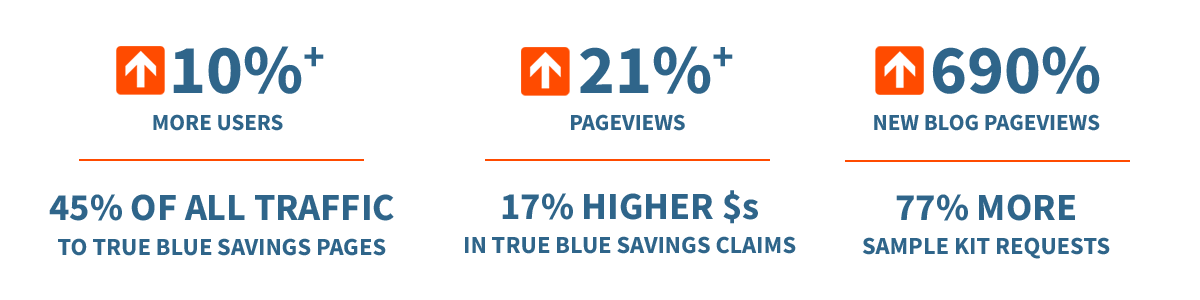
The prognosis: The new Mitigare.com is performing above expectations on its three critical jobs and in many other aspects.
Nearly all areas of the website are performing better than the old site this same time period last year. As part of our continuous improvement process, called Direct BrandingSM, we’ll implement enhancements to:
- Further empower the site’s content to continue to bump up its organic search authority in Google and Bing.
- Facilitate reasons and mechanisms for healthcare professionals and patient audiences to refer back to the site again and again with tactics that involve the Blog, Resources pages, new content and other channels driving traffic to the site.
Have an ailing website, microsite or landing page? Call on Responsory for the focused, results-oriented and compassionate care it deserves.